
Why a Hospital Replaced Its Door Vendor, and What Happened Next
July 14, 2026
The facilities team at a large medical facility had a door service vendor they could not rely on. Calls went unreturned for weeks. For a hospital managing hundreds of doors across a busy campus, that was not a minor inconvenience — it was a recurring problem with real consequences for staff, visitors, and patients.
When they switched to Del-Mar Door Service, they were not just looking for faster callbacks. They ended up with a different approach to door maintenance entirely.
From Reactive to Scheduled
The hospital signed a Preventative Maintenance Agreement with Del-Mar Door Service, which meant two things changed immediately.
First, their doors started getting looked at before they broke. Del-Mar performs two scheduled maintenance checks per year under the agreement, which catches worn components, alignment issues, and mechanical wear while they are still minor problems rather than failures. In a building where door access affects patient flow, visitor safety, and staff movement, that difference adds up fast.
Second, when something did need attention between scheduled visits, the facility had priority service status. No sitting in a queue. No leaving a message and hoping for a callback.
The facility manager put it directly:
"When you have hundreds of doors in your facility, hiring professional/certified help is of utmost importance. This is especially true when it comes to the health and safety of our patients, staff, and visitors. We had been using a company that was unreliable for our door service. They would often take weeks to get back to us. We hired Del-Mar Door and often times they make a fix in the same day and have parts available in their van(s)."
Same-day service. Parts already on the van. That is what a properly run service agreement looks like in practice.
What It Actually Costs to Wait
There is a financial case for preventative maintenance that does not get talked about enough.
Emergency service calls cost more than scheduled ones, always. Labor rates go up for on-demand dispatch. Parts sourced in a hurry carry a premium. And if a door is down long enough to affect operations, you are paying in ways that do not show up on any invoice. Scheduled maintenance reduces the frequency of those calls significantly — facilities with a PMA in place save at least 25% over the life of their doors compared to running purely on reactive repairs.
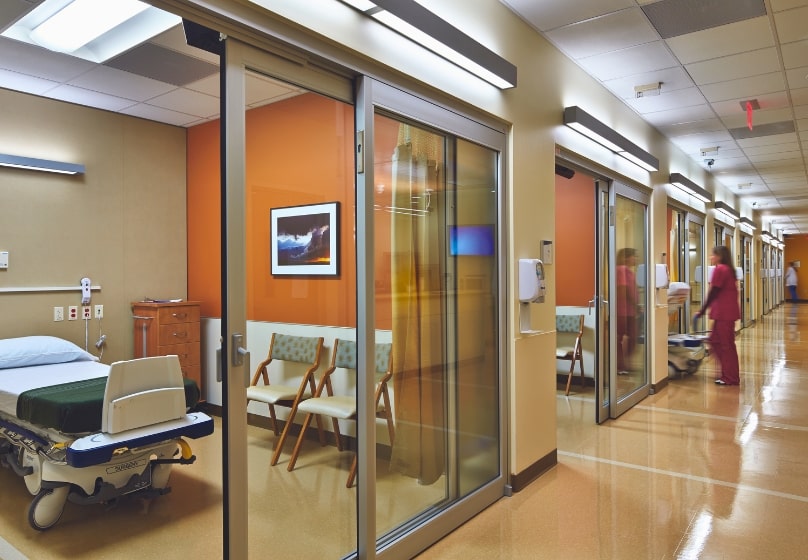
The facility's agreement also covers their Won-Door Fire & Security horizontal sliding doors, so one service relationship handles the full scope of their automatic door needs. One vendor, one point of contact, one service history.
.jpg?width=700&height=484)
What to Look for in a Service Agreement
If you manage a healthcare facility and your current door vendor relationship feels more like a guessing game than a partnership, here is what a good agreement should include.
Scheduled preventative maintenance, at least twice a year
Anything less and you are still mostly reactive. The goal is to keep doors in front of problems, not behind them.
Certified technicians on every visit
In a healthcare environment, who is walking through your facility matters. Del-Mar technicians are AAADM certified, which means training, testing, and accountability, not just someone with a toolkit.
Priority service status
When something does go wrong between scheduled visits, you should not be treated the same as a first-time caller. Priority status means you are first in line, not last.
Parts availability
A technician who shows up without the right parts accomplishes nothing. Ask your vendor directly: do your techs carry inventory on their vehicles?
Coverage that matches your building
If your facility has multiple door types — automatic sliding, swing, fire-rated, specialty healthcare doors — confirm your agreement covers all of them. A partial agreement creates gaps.
The Right Partner Makes the Difference
For this facility, the switch to Del-Mar meant same-day service, certified technicians, and a maintenance program that kept doors running instead of waiting on them to fail. That is what a well-run service agreement delivers.
If your facility is running on a reactive model, calling for service only when something fails, it is worth finding out what a structured maintenance agreement would actually cost. For most healthcare operations, the math is not close.
Learn more about Preventative Maintenance Contracts