
How To Choose Long Lasting Automatic Doors That Won't Fail You When You Need Them Most
February 17, 2026
Most “problem doors” don’t happen by accident. They start with the wrong commercial door type, the lowest‑bid installation, or choices made without considering real long‑term use. Years later, maintenance teams are still managing complaints, downtime and surprise failures.
The automatic doors you choose - and how they’re installed - will follow you for years. This guide pulls from Door Services Corporation’s experience designing, installing and servicing automatic entrances so your next project is one you barely have to think about.
Start With How Your Entrances Really Work
Matching automatic door type to real traffic and conditions
On a plan, most openings look the same. In real life, they do not. Some entrances carry a constant stream of people in both directions. Others handle carts, beds, deliveries or gurneys. Some sit in quiet interior corridors. Others face wind, rain and temperature swings at an exposed exterior.
Choosing between sliding doors, a swing operator or another automatic solution should start with how that entrance is actually used. A sleek storefront door with glass doors might look right until you factor in wind load in a tight vestibule. A basic swing might seem fine until you see how often people arrive with mobility devices or equipment.
When Door Services Corporation plans a commercial door installation, they begin with those practical questions. How many people move through? At what times? With what equipment? What happens if the door is out of service? That picture drives the choice of door type so the entrance works with the building instead of against it.
Building in accessibility, safety and security from day one
A good entrance balances ease of use, life safety and security. When these elements are added after the fact, they often conflict.
Door Services Corporation designs automatic entrances with all of that in view. For a hospital, that might mean an ICU door that supports infection control and fast movement. For a multi‑site retailer, it might mean consistent sliding doors that balance open, inviting access with predictable locking and alarm behavior. Getting those decisions right up front avoids a lot of rework, replacement and repair later.
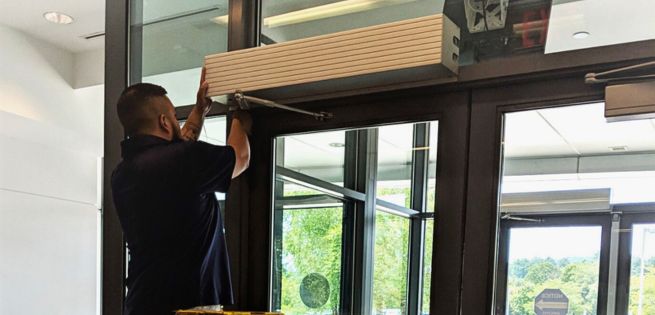
Why Installation Quality Matters More Than The Spec Sheet
What a proper automatic door installation really involves
Good installation is more than hanging a header and turning on the power. The opening has to be prepared correctly so frames and supports are solid. The door frame must be square and anchored so the commercial door operates smoothly. Operators and tracks must be mounted and aligned so the door moves as intended. Door hardware and safety sensors have to be placed, aimed and tested so they protect people without constant nuisance stops. Controls must be set up for the actual environment so doors open, close and hold the way you need them to.
Door Services Corporation trains its installers on major door brands, like Horton Automatics, and follows manufacturer standards and local codes. Quality installation dramatically reduces future failures, repair calls and premature wear.
The hidden costs of chasing the lowest install price
On paper, two automatic door proposals can look almost identical. One is a bit cheaper. It is easy to feel like that is the smart choice. What you may not see is how that lower price was achieved. If the installer cut corners on preparation, skipped tests or rushed commissioning, the result is often a door that drags, fails to seal, bounces off safety stops or wears out parts early. Each of those issues becomes a commercial door repair call.
Because Door Services Corporation also services what it installs, the team sees the full cost curve. Doors that were installed carefully and matched to their use need fewer emergency visits. Doors that were installed to win on price show up again and again in the schedule. Over the life of the door, the “cheapest” installation can end up costing the most in repair, maintenance and even lost energy efficiency.
Don’t Separate Who Installs It From Who Has To Fix It
How split install and service vendors leave you in the middle
When one company installs your doors and another services them, recurring issues can turn into a blame game - while your team deals with downtime.
A single partner across installation and service eliminates confusion. Door Services Corporation technicians already understand the system, its components and what “normal” should look like, making troubleshooting faster and more accurate. You get one point of accountability for the door’s entire life cycle.
The advantage of one partner across installation and service
Working with a partner who both installs and services automatic doors simplifies that picture. The same organization that recommended and installed the system understands its components, controls and intended performance.
When Door Services Corporation is called back to a door they installed, their technicians already know how it is put together and what “normal” looks like in that location. That applies whether the opening has hollow metal doors, commercial wood doors, metal doors with specialized hardware or glass doors at a main entry. They can see quickly whether they are dealing with normal wear, a configuration issue or a sign that something in the original setup no longer fits the way the building is used.
For facilities leaders, that means one point of accountability. You are not stuck refereeing between vendors. You have a partner whose advice connects both sides of the door’s life: how it was installed and how it is maintained, and who can provide both door installation service and ongoing commercial door repair when needed.

Design Today With Tomorrow’s Maintenance In Mind
Choosing automatic doors that are easier to service later
Every door you install becomes part of your maintenance workload. Some designs are easier to live with than others. Brand, operator type, sensor packages and layout all affect how easy a door is to service. Systems built from well‑supported components, with reasonable access to key parts, make every repair or adjustment faster. Niche products with limited parts or awkward layouts do the opposite. That is true across a wide range of openings, from industrial doors at a loading area to high speed doors in a busy corridor.
Door Services Corporation brings real service experience into every commercial door installation. Installers and technicians know which automatic doors perform best in busy retail sites, healthcare facilities and multi‑site portfolios - helping you avoid systems that will be costly or difficult to maintain.
Using Service Experience to Guide New Installations
Service history is a clear feedback loop. Doors that rarely show up in the log beyond scheduled preventive maintenance were likely the right choice. Doors that generate constant emergency calls signal a deeper mismatch between product, installation and environment.
Door Services Corporation pays attention to those patterns when advising on new commercial door installation and upgrades. Instead of repeating designs that struggle, they recommend doors and setups that have held up in similar conditions. That might mean shifting from a basic steel door to a more appropriate security door in a sensitive area, or reevaluating the hardware on an existing door that keeps failing. Each new project benefits from what has already been learned in the field.
A Simple First Step For Your Next Automatic Door Project
You don’t need a full facility audit. Start with one entrance - a main lobby, a busy retail doorway or a problematic healthcare opening. Consider how it’s used and what happens when it’s down.
Share that picture with Door Services Corporation. Their team will recommend an installation tailored to real conditions and stand behind it with ongoing service and repair expertise.
One thoughtful decision today can prevent years of headaches, callbacks and repair costs.