
Keeping Doors Reliable With Smart Service & Preventative Maintenance Agreements
March 04, 2026
Building A Door Service Plan That Actually Works
Even the best commercial door installation will eventually need attention. Automatic and sliding doors work hard every single day - hardware loosens, frames shift, sensors drift, and door operators may carry more load than the spec sheet anticipated.
Without a clear automatic door maintenance plan, facilities teams fall into a frustrating cycle: the same entrances fail at the worst times, you scramble for emergency repair, staff lose patience, and leadership keeps asking - why does this keep happening?
This commercial door servicing guide, the second in our series (view Part I here), draws on Door Services Corporation's experience in automatic door service, commercial door repair, and preventative maintenance to help you move from constant reaction to a routine you can actually rely on.
The Real Cost of Always Being in Emergency Mode
Living on emergency repairs might feel responsive, but it quietly drains your time, budget, and credibility. A skilled technician arrives, fixes the automatic sliding door, everyone moves on — and then a few weeks later, the same door stalls again, or another high-traffic entrance fails just as a crowd arrives.
Over time, people simply stop expecting doors to work. They build workarounds, avoid certain entrances, and accept that those doors always act up - and those costly repairs add up fast.
What Door Services Corporation sees in these situations isn't a problem with every automatic door or every brand - it's a lack of structure around how doors are cared for after installation.
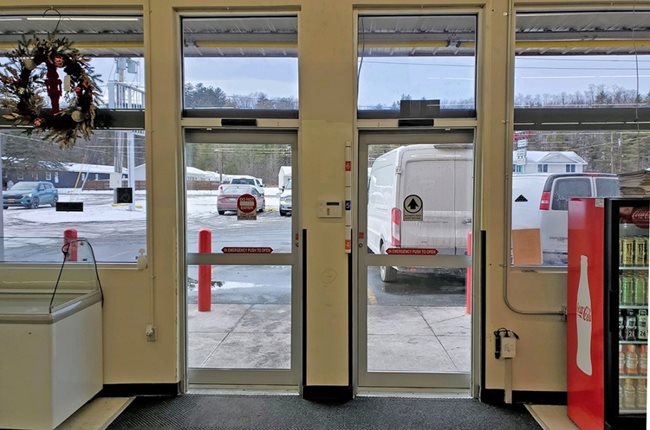
Smart Service Means More Than "We'll Be Right There"
Fast response absolutely matters. When an automatic door at a main entry jams or a commercial door in a healthcare wing sticks, you need a skilled technician who can restore safe operation quickly. That will always be a core part of any door service strategy.
But if the plan stops at "call when it fails," the same automatic doors will keep showing up on your repair log. Weather changes, debris collects, door operators strain, and sensors drift out of alignment - and before long, you're right back where you started.
When Door Services Corporation handles automatic door repair, technicians look beyond the immediate symptom. They examine the entire door system - the door operator, frame, moving parts, and sensors - and explain what failed, why it happened, and what it might mean down the road. Over time, that approach turns individual repairs into real insight, helping you see which automatic doors need regular maintenance and which are signaling something deeper needs to change.
How Preventative Maintenance Agreements Create Reliability
Routine maintenance works best when it reflects how your building actually operates. A main lobby automatic door, a loading dock door, and a storage room door that opens twice a week carry very different risk profiles. Treating them all the same spreads effort too thin.
Door Services Corporation builds preventative maintenance agreements around real usage patterns. A busy automatic sliding door at a hospital entrance might need regular checks of the door operator and sensors, debris clearing from tracks, and verification that it closes fully for both safety and energy efficiency - delivering real energy savings over time. A security door might get frequent checks focused on latching, access control coordination, and smooth operation under stress. As part of regular maintenance visits, technicians will also lubricate moving parts and inspect the door opener to help prevent sensor malfunction and maintain optimal performance.
The result is a focused plan - some automatic doors are inspected twice a year, others once a year — ensuring the highest‑risk entrances get the attention they deserve.
Let Your Repair History Point to the Real Issues
Every service visit tells you something. One automatic door repair might not reveal much, but a pattern of repairs for the same door draws a clear picture.
If an automatic sliding door has needed commercial door repair multiple times for similar issues, that's a signal. If sliding doors in one area keep needing frame or latch adjustments, the underlying structure or hardware may be off. If sensors across the same zone cause frequent nuisance stops, regular maintenance can often catch and correct this before it escalates - whether you're dealing with revolving doors, sliding doors, or standard commercial doors.
Door Services Corporation reviews service history across your buildings to find these patterns, shifting you from guessing to knowing. Doors that rarely appear in the records are likely in good shape. Those that generate frequent repair calls may be telling you it's time to think about a different solution entirely.
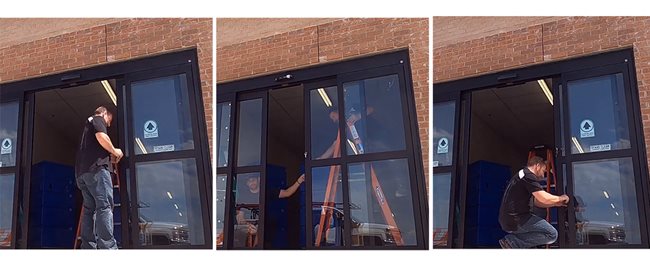
Knowing When to Stop Repairing and Start Planning
There's a natural instinct to say "let's fix it one more time." But at some point, the cost of ongoing repair begins to outweigh the investment in something new.
Using repair history and on-site inspection, Door Services Corporation helps you recognize that turning point. Sometimes a focused hardware or sensor update is enough to restore smooth operation. Other times, a new automatic door installation - better matched to the opening, traffic, and environment - delivers a more reliable entrance and reduces long-term burden on your team. Because Door Services Corporation also handles commercial door installation, these recommendations are grounded in real-world experience, not just theory.
Why Good Documentation Is Non-Negotiable
After any automatic door maintenance or repair visit, you should be able to quickly see which door was serviced, what the technician found, what was done, and what they recommend next. When notes are vague, you're left explaining work you can't fully support.
Door Services Corporation treats documentation as a core part of every service visit — written to be read, not decoded. Over time, those records reveal which entrances have been stable and which have quietly consumed more budget than they should, making it far easier to adjust maintenance agreements, plan upgrades, or build a case for capital investment.
A Practical Way to Start
You don't need to overhaul your entire maintenance strategy to see a difference. Start with the automatic doors everyone already knows are a problem - the sliding door at your busiest entrance, the interior commercial door that always acts up, or the one near a sensitive area that stresses your security team.
Look at how often each door has failed, what repairs it's needed in the past year, and who's affected when it goes down. Door Services Corporation can help you turn that short list into a pilot for a better plan - recommending targeted automatic door repair, adding doors to a regular maintenance agreement, or planning an upgrade where the data supports it.
Once those first few doors are stable, expanding the approach becomes much easier. The fire drills fade. Automatic doors become dependable. And when someone asks what you're doing to keep entrances safe and reliable, you'll have a clear, confident answer.
Door Services Corporation is built to support that full journey - from quick automatic door repair when something goes wrong, to ongoing maintenance and long-term planning that keeps your door systems working the way they should.